 (1).png)
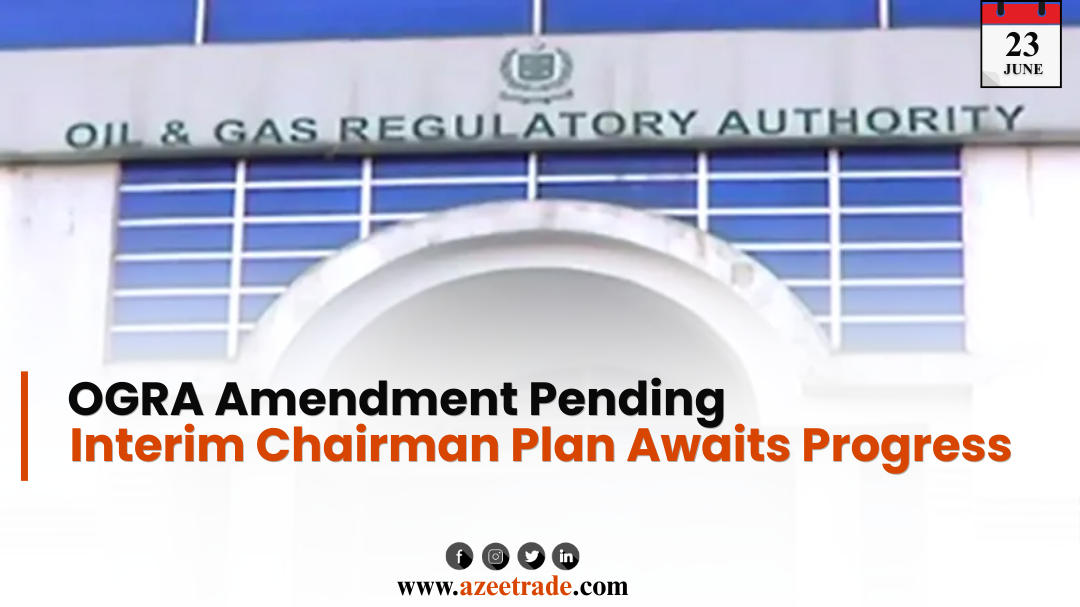
The federal government's proposal to amend the Oil and Gas Regulatory Authority (OGRA) Ordinance, 2002, to facilitate the interim appointment of a chairman from the civil service remains in limbo despite securing approval from the Cabinet Committee for Legislative Cases (CCLC), raising concerns over leadership continuity at the country's energy regulator.
According to informed sources, the Cabinet Division briefed the CCLC that the current law requires the appointment of an OGRA chairman through a detailed and often lengthy recruitment process. Under Section 3(8)(a) of the OGRA Ordinance, the chairman is appointed by the federal government for an initial four-year term, extendable for another term.
Officials informed the committee that the appointment process involves public advertisement, scrutiny of applications, shortlisting, interviews, and final approval by the federal cabinet. The process can take several months and may need to be repeated if no suitable candidate is found.
The Cabinet Division cited the previous appointment process initiated in 2020, which was completed only in 2021 after the position had to be re-advertised due to the absence of a suitable candidate.
To avoid leadership gaps and ensure continuity in the regulator’s operations, the government proposed amendments to Sections 2 and 3 of the OGRA Ordinance. The proposed changes would allow a BS-21 or higher civil servant, meeting the prescribed eligibility criteria and not serving in the Petroleum Division, to be assigned the additional charge of OGRA chairman on an interim basis.
Under the proposal, the interim appointment would remain valid for a maximum of three months or until the appointment of a regular chairman, whichever occurs earlier.
The Cabinet Division argued that previous arrangements, including assigning acting charge to an OGRA member under existing provisions, had proven insufficient and created administrative challenges that affected the regulator’s effectiveness.
To formalize the changes, the government prepared the Oil and Gas Regulatory Authority (Amendment) Act, 2026, which was vetted by the Law and Justice Division and received in-principle approval from the federal cabinet. The CCLC subsequently endorsed the proposed amendments after detailed deliberations.
The committee further directed that if parliament is not in session when the cabinet formally ratifies the proposal, the legislation should be processed through a Presidential Ordinance under Article 89(1) of the Constitution in consultation with the Law and Justice Division.
Despite receiving CCLC approval, progress on promulgating the amendment has reportedly remained slow, creating uncertainty regarding the government's timeline for implementation.
Industry observers note that OGRA plays a critical role in regulating Pakistan’s oil and gas sector, including licensing, pricing oversight, and consumer protection. Any prolonged vacancy in its top leadership position could affect regulatory decision-making at a time when the energy sector continues to face significant operational and policy challenges.
The proposed amendment is widely viewed as an effort to prevent administrative disruptions and ensure institutional continuity. However, the absence of visible progress following approval has raised concerns among policy stakeholders about delays in addressing governance gaps within one of Pakistan’s most important regulatory bodies.
Until the amendment is formally enacted or a regular chairman is appointed, uncertainty surrounding OGRA’s leadership structure is expected to remain a key issue for the country's energy sector.





















































-falls-to-rs43.57tr)




















































































































-rises-to-rs44.35-trillion)
























-surges-to-rs44.23-trillion-as-bank-deposits-jump)



























































-falls-weekonweek-to-rs40.95tr)















































































































































-ltd-reports-strong-halfyearly-results-–-profit-surged)
























































































)












Add a comment